Manual Lead Follow-Up vs. Automation: What Really Costs You
Manual Follow-Up Isn't a Discipline Problem. It's a Math Problem.
Let's clear something up first. If your lead follow-up is inconsistent, it isn't because you're lazy or disorganized. It's because you're on a roof, under a sink, in a truck, or elbow-deep in the actual work that pays the bills. That's the whole point of being an owner-operator — you do the job and run the business.
The problem is that follow-up doesn't wait for your lunch break. A lead fills out your form at 10:42 AM while you're mid-install. By the time you wipe your hands and check your phone at 6 PM, they've already called two competitors, gotten a quote, and maybe booked one. You didn't lose that lead because you didn't care. You lost it because the timing of real life doesn't line up with the timing of buying decisions.
That's the math problem. There's one of you, and there are a dozen things screaming for your attention at any given moment. Manual follow-up assumes you'll always have a free hand and a clear head at exactly the right moment. You won't. Nobody does.
The Dropped-Lead Pattern Every Busy Owner Knows
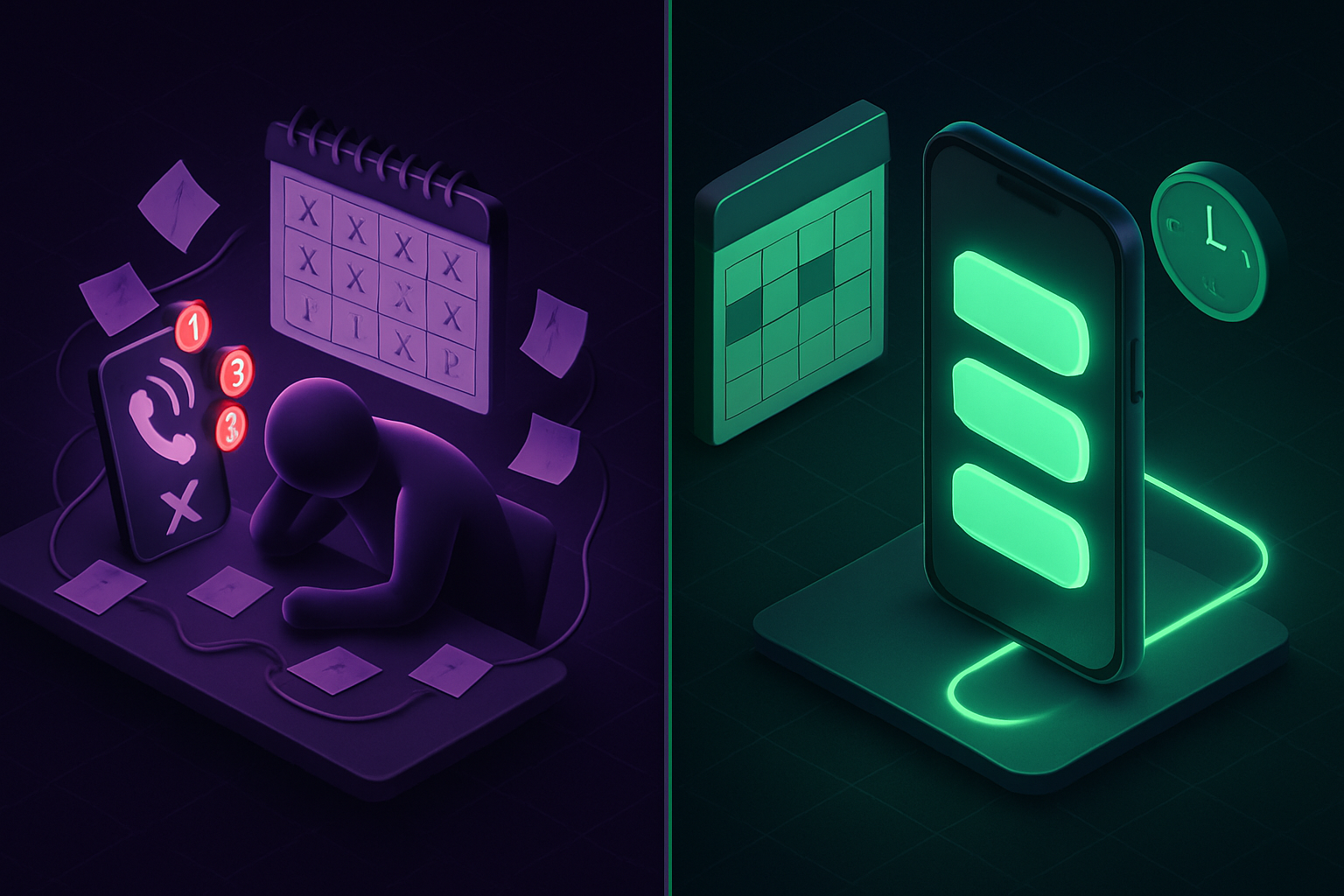
Here's how it plays out, and you've probably lived this exact sequence. A lead comes in. You see it. You think, "I'll call them back after this job." The job runs long. Something else comes up. The next morning you've got three new fires and that lead is now buried under fresh notifications. You finally call two days later and get voicemail. You leave a message. They never call back.
Multiply that by every lead that trickles in during a busy week. The painful part isn't the leads that say no — it's the leads that would've said yes if you'd just reached them while they were still hot. Those are paid leads, hard-earned referrals, and people who genuinely needed what you sell. They didn't reject you. They just moved on because someone else answered first.
This pattern is silent. It doesn't show up as a complaint or a bad review. It shows up as a quieter phone and a calendar with gaps you can't quite explain. Most owners never connect the dots, because the leads that slipped away never tell you they slipped away.
Leads Expect Multiple Touches — Not One and Done
Here's the part that makes manual follow-up nearly impossible to win at: one touch is almost never enough. The data on this is brutal and consistent. Most deals aren't closed on the first contact. They're closed on the fourth, fifth, or sixth — a mix of calls, texts, and emails spread across days.
But be honest with yourself. When you're slammed, how many leads get more than one attempt from you? You call once, maybe leave a voicemail, and mentally file them as "not interested" when really they were just busy too — and the leads who Get Started with a real follow-up system tend to be the ones who book. They were driving, working, or putting kids to bed when you called. A second text an hour later might have booked the job. A friendly check-in two days later might have closed it.
The truth is that consistent, multi-step follow-up wins business — and it's exactly the kind of repetitive, perfectly-timed task that human beings are bad at and machines are great at. You're not going to remember to send a fifth touch to a lead from last Tuesday. You shouldn't have to.
Why a CRM Alone Doesn't Fix This
A lot of owners hear "follow-up problem" and think "I need a CRM." So they buy one. And six weeks later it's a graveyard of contacts they entered once and never touched again. A CRM is a filing cabinet. It stores the lead. It does not chase the lead.
This is the gap nobody warns you about. A CRM still relies on you to log in, remember who needs a follow-up, decide what to say, and send it at the right time. It just moved your to-do list into a nicer-looking app. The bottleneck is still you — your time, your memory, your free hands. If you didn't have time to follow up before, a database isn't going to give you that time back.
What actually fixes the dropped-lead pattern is automation that sits on top of the system and does the chasing for you. Not a place to store leads. A machine that works them. That's the difference between software that organizes your problem and a system that solves it.
Storage vs. Action
Think of it this way: a CRM knows a lead exists. An automated follow-up sequence makes sure that lead hears from you five times in the first week — instantly, then on a schedule — without you touching a single button. One is passive. One is relentless on your behalf.
What Automated Follow-Up Actually Does Instead
Picture the same lead from earlier — the one who filled out your form at 10:42 AM while you were mid-install. With an automated follow-up system in place, here's what happens without you lifting a finger. Within seconds, they get a text: a warm, branded message confirming you got their request and you'll be in touch. That instant response alone beats most of your competitors, who are also busy doing the work.
From there, the sequence runs. A follow-up text a few hours later. An email the next morning. A check-in two days after that if they haven't booked yet. Each message is timed, written, and sent automatically — nurturing the lead through the exact multi-touch rhythm that closes deals, while you stay on the roof. When they reply or book, the system routes it straight to your calendar and your dedicated business line, so you only step in when there's a real conversation to have.
Now run the busy-week scenario again. Twelve leads come in across five chaotic days. Instead of you remembering to chase each one — and missing half — every single lead gets a consistent, professional sequence of touches. The ones who were going to ghost you still might. But the ones who were just busy? They get reached at the right moment, by name, on autopilot. That's the difference between a quiet phone and a full calendar.
This is the whole reason automated follow-up exists. It's not about replacing the personal touch — it's about making sure the personal touch actually happens instead of getting buried under your workday. You do the work you're great at. The system does the chasing you never have time for.